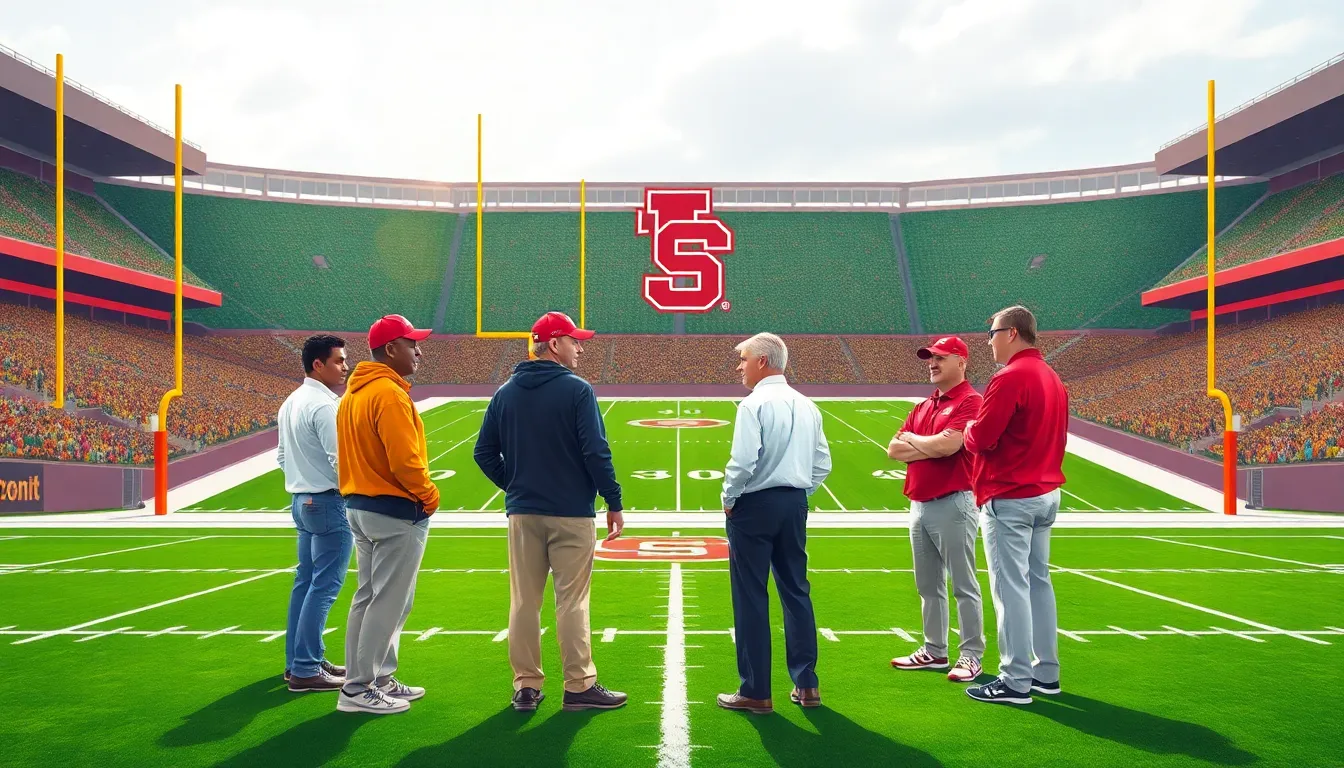
When it comes to Iowa State football, the coaches are the unsung heroes behind the scenes, crafting strategies and molding players into gridiron gladiators. They’re not just calling plays; they’re juggling egos, deciphering game plans, and occasionally dodging rogue footballs during practice. It’s a tough job, but someone has to do it—and they do it with style.
From legendary figures who’ve left their mark on the program to the fresh faces aiming to make their own legacy, Iowa State football coaches have a rich history filled with triumphs, challenges, and a sprinkle of humor. Dive into the world of these coaching maestros and discover how their unique approaches and quirky personalities shape the Cyclones’ journey each season. Whether it’s a winning season or a rebuilding year, one thing’s for sure: Iowa State football wouldn’t be the same without them.
Iowa State Football Coaches
Iowa State football coaches play a pivotal role in shaping the team’s performance and culture. They develop strategies that enhance player skills and foster teamwork. Managing egos presents a significant challenge, especially in high-pressure situations. Coaches navigate complex game plans, adjusting tactics based on opponents and player capabilities.
The history of Iowa State coaches features a blend of legendary figures and newer talents. Leaders like Jim Walden and Dan McCarney laid strong foundations, instilling a winning mentality. Current coaches bring modern philosophies, adapting to today’s fast-paced game. Personalities of coaches often add a unique flavor to the team environment, making practices engaging and motivating.
Analyses reveal that coaches also contribute to player development off the field. They mentor young athletes, guiding them through academic challenges and personal growth. Relationships built between coaches and players often lead to lasting impacts, promoting success in life beyond football. Each coach brings expertise that enriches the overall experience at Iowa State.
Commitment to excellence remains a core tenet among Iowa State coaches. They emphasize discipline and hard work, crucial for maintaining competitive edge. Their influence continues to elevate the program, irrespective of seasonal fluctuations. Focus on recruiting talented staff reinforces this commitment, ensuring future successes.
Coaching staff at Iowa State embody resilience and adaptability. Each season presents new hurdles, but these leaders face challenges head-on. Success stems not only from wins but from cultivating a strong team spirit and character development. Every coach contributes to the legacy of Iowa State football, crafting stories that resonate in the hearts of fans and players alike.
Historical Context
Iowa State football coaches have played a pivotal role in shaping the program’s trajectory and success. Understanding their history highlights the evolution of coaching philosophies and strategies.
Early Coaches and Their Impact
Jim Walden, among the earliest impactful coaches, set a high bar in the late 1970s and early 1980s. He introduced innovative offensive strategies that revitalized Iowa State’s gameplay. Dan McCarney built on that legacy through the 1990s, fostering a winning mentality and focusing on player development. Each coach contributed significantly to establishing the team’s identity, navigating various challenges along the way. Players flourished under their mentorship, gaining skills that extended beyond the field.
Significant Changes Over the Years
Over the decades, Iowa State football coaching has undergone transformative changes. New approaches to training emerged, integrating technology and data analytics for game preparation. Modern coaches emphasize mental toughness, resilience, and teamwork, creating a holistic athlete development framework. As recruitment techniques evolved, coaches utilized increasingly diverse scouting methods to attract top talent. The coaching staff now embodies a blend of tradition and innovation, adapting to the changing landscape of collegiate football while preserving the team’s core values.
Notable Iowa State Football Coaches
Iowa State’s football program boasts a rich legacy of influential coaches, each leaving a lasting mark on the team’s history.
Coach John H. Wilson
John H. Wilson, who coached Iowa State from 1948 to 1956, established a competitive spirit. Under his guidance, the team achieved a noteworthy 54-36-4 record. Wilson’s innovative approach laid the groundwork for future successes, especially in cultivating talent and discipline.
Coach Jim Walden
Jim Walden led Iowa State from 1978 to 1986, bringing a fresh perspective to the program. His tenure saw the introduction of dynamic offensive strategies, resulting in several winning seasons. Walden’s emphasis on player development and motivation elevated the program’s profile nationally.
Coach Dan McCarney
Dan McCarney’s impact spanned from 1995 to 2006, where he revitalized the Cyclones. He built a reputation for resilience and determination. Under McCarney, the team achieved remarkable milestones, including a historic victory at the 2000 Insight Bowl, showcasing his commitment to excellence.
Coach Paul Rhoads
Paul Rhoads served as head coach from 2009 to 2015, guiding Iowa State to some memorable moments. His leadership led to a dramatic victory over Iowa in 2011, igniting excitement among fans. Rhoads focused on instilling a strong work ethic and fostering a fighting mentality within the team.
Coach Matt Campbell
Matt Campbell took over in 2016, modernizing the program with cutting-edge strategies and analytics. His leadership has consistently produced competitive teams in the Big 12 Conference. Campbell emphasizes holistic player development, mentoring athletes on and off the field, and has gained national recognition for his results.
Coaching Style and Philosophy
Coaching styles at Iowa State football blend tradition and innovation. Coaches focus on developing comprehensive strategies to enhance performance.
Offense and Defense Strategies
Offensive strategies emphasize adaptability and creativity. Coaches design plays that leverage player strengths and exploit defensive weaknesses. Each game plan reflects meticulous preparation and film analysis. Defensive approaches prioritize discipline and fundamental techniques. Teams aim to create turnovers and disrupt opponent rhythms. Coaches instill a mindset geared toward resilience on both sides of the ball. Modern data analytics enhance decision-making and strategy adjustments during games.
Player Development and Recruitment
Player development remains a cornerstone of Iowa State football. Coaches mentor athletes not just in skills but in character and resilience. Individual training plans align with personal goals and academic success. Recruitment strategies target talented athletes who fit the program’s culture. Assessments include on-field performance and off-field demeanor during visits. Building relationships fosters trust and commitment among recruits. Coaches emphasize the importance of teamwork and a strong work ethic, vital for long-term success.
Conclusion
Iowa State football coaches play an indispensable role in shaping not just the team’s performance but also the character of the athletes. Their dedication to developing both skills and personal growth ensures that players are well-equipped for challenges on and off the field. By blending tradition with modern strategies they create a dynamic environment that fosters success.
The legacy of Iowa State coaches is evident in the program’s evolution and the strong community spirit they cultivate. Their commitment to excellence and resilience continues to inspire future generations of players. As they navigate the complexities of the game they remain the backbone of Iowa State football, continually driving the program forward.