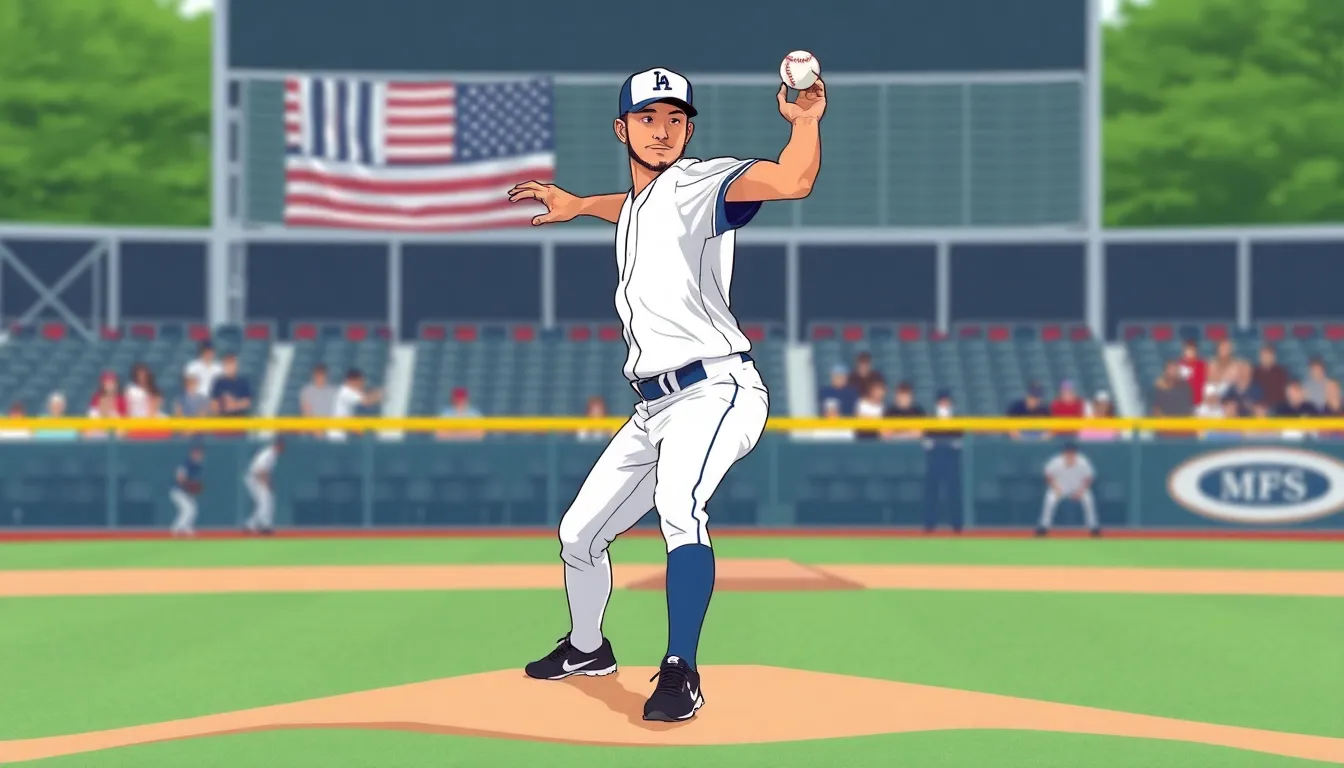
Baseball isn’t just a game; it’s a symphony of strategy, skill, and a sprinkle of magic. Every pitch thrown is a chance for a pitcher to dazzle fans and leave batters scratching their heads. From the classic fastball that zooms like a caffeinated cheetah to the sneaky curveball that defies gravity, each pitch type has its own personality and purpose.
Baseball Pitch Types
Baseball features numerous pitch types, each serving distinct purposes in gameplay. Fastballs, often the most common pitch, rely on speed and precision to overpower batters. The standard fastball reaches speeds up to 100 mph, making it a formidable choice for pitchers aiming for quick outs.
Changeups deceive batters by mimicking the fastball’s delivery. Slower in speed, they typically range between 70 and 85 mph. This pitch disrupts the timing of hitters, often resulting in weak contact or strikeouts.
Curveballs stand out due to their dramatic downward movement. They generally travel at 70 to 80 mph and confuse batters by dropping sharply as they approach the plate. This pitch requires excellent technique to achieve maximum spin and break.
Slider pitches combine speed with lateral movement. They usually range from 80 to 90 mph and confuse hitters with their sudden shifts in direction. Effective sliders can lead to ground balls or easy pop-ups.
Sinkers, which generate downward force, induce ground balls with their sharp movement. These pitches typically travel at 90 mph but create unpredictable trajectories as they approach home plate.
Lastly, splitters, also known as split-finger fastballs, create a distinct drop as they approach the batter. Relying on grip and hand positioning, they often fall in the 80 to 90 mph range, presenting a major challenge for hitters.
Understanding each pitch’s role enhances a player’s strategic approach. Mastery of various pitches allows pitchers to adapt to different batters and situations during a game.
Fastballs
Fastballs dominate the pitcher’s arsenal. These pitches prioritize speed and precision, making them effective tools in a game.
Four-Seam Fastball
Four-seam fastballs maximize velocity through a standard grip. Uniform spin creates a straight trajectory, allowing pitches to reach speeds up to 100 mph. Due to its consistency, batters find it more challenging to hit. The grip involves holding the ball across the seams, with fingers positioned to create optimal backspin. Many pitchers rely on the four-seam fastball for strikeouts and critical moments in games. Statistics show this pitch accounts for a significant percentage of pitches thrown in Major League Baseball.
Two-Seam Fastball
Two-seam fastballs produce movement in addition to speed. This pitch grips along the seams, generating tailing action that confuses hitters. Typically, two-seam fastballs travel slightly slower than their four-seam counterparts, leading to ground balls and weak contact. The added movement often results in less predictable paths, making it challenging for batters to make solid contact. Many pitchers incorporate the two-seam fastball when attempting to induce double plays or when facing left-handed hitters. As a result, this pitch serves as a strategic option in a pitcher’s repertoire.
Offspeed Pitches
Offspeed pitches play a critical role in a pitcher’s strategy, as they disrupt a batter’s timing and create opportunities for outs. These pitches vary in speed and movement, making them essential tools for any effective pitcher.
Changeup
The changeup deceives batters by imitating the fastball’s delivery but is significantly slower, typically around 8-10 mph less. This pitch relies on a smooth arm motion, which can confuse hitters expecting a fastball. Changeups often lead to weak contact or swinging strikes, as batters misjudge the timing. Pitchers commonly use this to keep hitters off-balance and neutralize power hitters.
Splitter
A splitter combines deception with a unique dropping action as it nears the plate. Thrown with a similar grip to a fastball, it maintains speed until the last moment, then drops sharply, often resulting in ground balls or swings and misses. Its effectiveness lies in the abrupt change in trajectory, which catches hitters unaware. Frequently deployed in critical situations, the splitter serves as a strikeout pitch against aggressive hitters.
Knuckleball
The knuckleball presents an unpredictable challenge due to its erratic movement. Thrown with minimal spin, this pitch floats and dances as it approaches the batter, making it difficult to hit. Typically delivered at slower speeds, the knuckleball often leads to weak contact and can frustrate even experienced hitters. Mastery of the knuckleball is rare, but when executed well, it becomes a potent weapon in a pitcher’s arsenal.
Breaking Balls
Breaking balls play a crucial role in a pitcher’s repertoire, often deceiving batters with unique movements.
Curveball
A curveball serves as a staple for many pitchers, known for its dramatic downward motion. It usually breaks as it nears the plate, making it challenging for batters to make solid contact. Pitchers throw a curveball with a distinct grip, applying pressure on the seams. This grip allows for maximum spin, resulting in the pitch’s signature arc. Batters anticipate speed but are often fooled by the pitch’s sharp drop, leading to swings and misses or weak ground balls.
Slider
The slider combines speed and lateral movement, effectively disrupting a batter’s timing. This pitch breaks late, darting to the side as it approaches the hitter. Pitchers often employ sliders on two-strike counts, aiming for a strikeout or weak contact. A proper grip involves the index and middle fingers across the seams, promoting tighter spin. Hitters struggle to adjust to its quick movement, increasing the chances for a successful outcome for the pitcher.
Cutter
A cutter, or cut fastball, offers a unique alternative, blending characteristics of both the fastball and the slider. This pitch has late movement, veering slightly away or towards batters depending on the pitcher’s grip. Efficiently used, cutters lead to weak contact or off-balance swings. Pitchers deliver them with a fastball grip but position the fingers slightly off-center. This technique creates a rapid, cutting action, challenging hitters expecting a straightforward pitch. Mastering the cutter often enhances a pitcher’s effectiveness against batters from both sides of the plate.
Specialty Pitches
Specialty pitches add depth to a pitcher’s arsenal, providing unique ways to outsmart batters in critical moments. Understanding these pitches enhances gameplay strategy.
Forkball
The forkball creates a dramatic drop just before reaching the batter. It uses a grip similar to a splitter, where a pitcher holds the ball deep between their index and middle fingers. This grip generates maximum spin and unpredictable movement. As the pitch approaches the plate, its sudden downward action can surprise batters, leading to swings and misses. Pitchers often rely on the forkball to disrupt timing or induce ground balls. Many consider mastering the forkball a sign of advanced pitching skill.
Sinker
Sinkers excel at creating ground balls and weak contact. This pitch appears as a fastball initially, but it features a unique downward movement just before reaching the batter. It is thrown with a two-seam grip, which generates additional tailing action. By inducing ground balls, sinkers help prevent extra-base hits and maintain defensive effectiveness. Pitchers often choose sinkers in tight situations, especially against hitters who struggle with lower pitches. Overall, sinkers represent a strategic tool in achieving defensive success.
Conclusion
Mastering the various baseball pitch types is essential for any pitcher looking to elevate their game. Each pitch serves a unique purpose and can dramatically influence the outcome of a play. By understanding the nuances of fastballs, breaking balls, and specialty pitches, pitchers can craft strategies that keep batters guessing.
The blend of speed, movement, and deception in pitching not only showcases a pitcher’s skill but also enhances the overall excitement of the game. As pitchers refine their techniques and adapt to different batters, they become more formidable on the mound. Embracing the art of pitching is a journey that can lead to remarkable achievements in baseball.