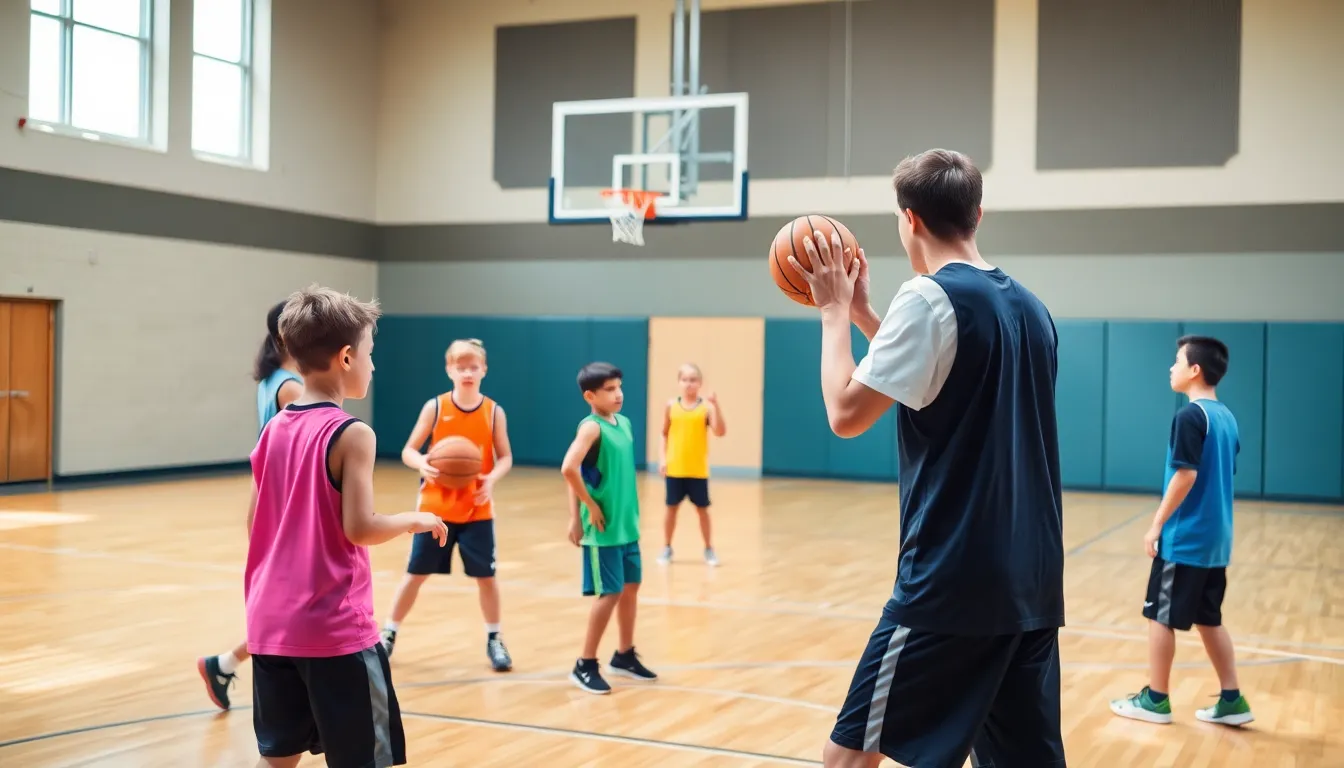
Basketball practice drills can make or break a player’s game. Whether they’re a seasoned pro or just starting out, the right drills can elevate skills, boost confidence, and even turn a benchwarmer into a star. Imagine the thrill of sinking that three-pointer or executing a perfect layup—all thanks to a few hours spent sweating it out on the court.
But let’s face it, nobody wants to spend practice time running laps like a hamster on a wheel. Instead, engaging drills can keep players motivated and make practice feel less like a chore and more like a game. From dribbling to shooting, these drills not only sharpen skills but also add a sprinkle of fun to the grind. So, lace up those sneakers and get ready to transform practice into something players actually look forward to.
Basketball Practice Drills
Basketball practice drills significantly enhance players’ skills and confidence at all experience levels. Engaging drills increase motivation, transforming practice into an enjoyable experience. Players develop essential skills like dribbling, passing, and shooting through consistent practice. Enjoyable drills foster a positive attitude toward training, encouraging players to participate actively.
Improvement in teamwork and communication skills occurs when players engage in drills together. Cohesion builds as athletes learn to work with teammates, making them more effective during games. An organized practice routine incorporating various drills helps maintain focus and discipline.
Drills focusing on fundamentals provide a solid foundation for advanced techniques. Mastering these fundamentals allows players to progress confidently to complex plays. Regular practice reinforces skills, ensuring that athletes can rely on their muscle memory during high-pressure situations.
Tracking measurable outcomes, such as shooting accuracy and dribbling speed, offers valuable insights into performance. Coaches can adjust training regimens based on individual players’ needs and progress. Furthermore, setting specific goals during practice encourages athletes to strive for continuous improvement.
Variety in drills prevents monotony, keeping players engaged. Incorporating competitive elements, such as timed challenges or team-based drills, adds excitement and encourages a fierce spirit among athletes. A dynamic practice environment cultivates resilience, helping players adapt to different game scenarios.
Ultimately, the value of basketball practice drills lies in their ability to create well-rounded athletes. Players who embrace these drills develop critical skills, teamwork capabilities, and a passion for the game. Prioritizing effective practice routines ensures that players remain motivated, engaged, and ready to excel on the court.
Types Of Basketball Practice Drills
Basketball practice drills come in various types, each focusing on key aspects of the game. Drills enhance skills, promote teamwork, and develop game strategies.
Skill Development Drills
Skill development drills focus on improving a player’s individual abilities. Dribbling exercises refine ball handling, allowing players to maneuver effectively under pressure. Shooting drills enhance accuracy, helping players find their rhythm and scoring consistency. Passing drills strengthen communication, ensuring accurate ball distribution. Rebounding drills increase awareness, enabling players to secure possession under the basket. Coaches often incorporate video analysis to track skill progression, providing valuable feedback.
Teamwork Drills
Teamwork drills emphasize collaboration and communication skills among players. These drills create opportunities to practice plays, helping teams develop chemistry on the court. Fast-break drills teach quick decision-making while executing plays in motion. Defensive drills focus on positioning and rotations, reinforcing principles of team defense. Scrimmages simulate game situations, allowing players to practice teamwork in high-pressure environments. Effective communication emerges as players learn to call for passes and shift defensive assignments seamlessly.
Essential Drills For Beginners
Engaging in foundational drills enhances skills for novice basketball players. These drills focus on developing essential techniques for effective gameplay.
Dribbling Drills
Dribbling drills enhance ball-handling skills while fostering confidence. Players practice basic movements such as crossovers, behind-the-back, and between-the-legs dribbles. Stationary dribble exercises help improve control, while zig-zag dribbling enhances speed and agility. Incorporating cones or markers can create obstacle courses, challenging players’ spatial awareness. Continuous practice allows athletes to develop muscle memory, leading to smoother execution during games. These fundamental drills lay the groundwork for more advanced techniques.
Shooting Drills
Shooting drills build accuracy and consistency in shooting form. Players focus on various shooting techniques, including free throws, layups, and jump shots. Starting with close-range shots helps develop confidence before progressing to longer distances. Players can practice off-the-dribble shots for added complexity. Utilizing a shooting machine or rebounder facilitates repetition, ensuring players maximize their shooting practice. By establishing a solid shooting foundation, athletes improve their scoring ability during competitive play.
Advanced Drills For Experienced Players
Advanced players can benefit from specialized drills that sharpen skills and improve performance. These drills focus on enhancing tactical awareness and physical conditioning.
Defensive Drills
Defensive drills challenge players to refine their positioning and anticipation skills. One effective drill involves one-on-one situations, where players must maintain pressure while anticipating their opponent’s moves. Implementing closeout drills can improve footwork and quickness when contesting shots. Additionally, incorporating defensive slides helps players develop lateral movement and agility. Working in pairs, players can practice rotation and help defense scenarios, creating a more comprehensive understanding of team concepts. Regular practice of these drills increases defensive proficiency and fosters a competitive edge on the court.
Conditioning Drills
Conditioning drills enhance players’ stamina and endurance, essential for maintaining peak performance during games. Sprint intervals build explosive speed and quickness. Adding agility ladder drills focuses on foot speed and coordination while reinforcing body control. Incorporating circuit training can combine strength exercises with cardio activities, maximizing efficiency in training sessions. Moreover, incorporating ball handling during conditioning drills simulates game-like scenarios, benefiting both skill and fitness simultaneously. Focusing on these drills prepares athletes to endure the rigors of high-intensity play, ensuring they perform at their best.
Tips For Effective Basketball Practice
Organizing practice sessions starts with an established routine that focuses on skill development and teamwork. Prioritize a warm-up to prepare bodies and minds for the intensity of drills. Include stretching, mobility exercises, and light cardiovascular activities to enhance overall readiness.
Incorporating variety keeps players engaged. Rotate through different drills that target multiple skills, including shooting, passing, and defensive techniques. Schedule competitions within drills to encourage healthy rivalry, which boosts motivation and sharpens skills.
Using feedback plays a vital role in Player improvement. Regularly analyze performance through both observation and video, allowing for targeted coaching. Set specific, measurable goals for each session, such as improving shooting accuracy to 80% or reducing dribbling turnovers by half.
Fostering communication among players is essential. Encourage open dialogues during drills, allowing teammates to express insights and suggestions. Promote team-building activities off the court to strengthen relationships and enhance on-court chemistry.
Incorporating game-like situations within practice prepares players for real matches. Implement scrimmages that mimic competitive scenarios, helping them develop decision-making skills under pressure. Adapting drills based on player needs ensures continuous growth and addresses areas requiring improvement.
Tracking progress further motivates players. Maintain records of each player’s performance, providing them with tangible evidence of their development. Celebrate milestones, reinforcing a culture of achievement and encouraging perseverance.
Focusing on these key aspects during basketball practice ensures players develop holistically. Staying dedicated to practice routines leads to the improvement of skills essential for success in competitive play. Engaging drills combined with effective coaching creates an environment where athletes thrive.
Conclusion
Basketball practice drills are vital for developing a player’s skills and fostering a love for the game. By incorporating a variety of engaging drills, athletes can build confidence while improving key abilities like dribbling and shooting.
These practices not only enhance individual performance but also promote teamwork and communication among players. A structured routine that includes both foundational and advanced drills ensures continuous growth and readiness for competitive play.
Ultimately, the right combination of drills and a supportive environment cultivates well-rounded athletes who are motivated to excel on the court. Embracing this holistic approach to training will lead to significant improvements in both individual and team performance.